Top Interior Design Trends for Small Homes Going Into 2026
Top Interior Design Trends for Small Homes Going Into 2026
Reading time: 12 minutes
Living in a small home doesn’t mean living small. In fact, some of the most innovative, breathtaking interior design work happening right now is being done in apartments under 600 square feet, compact townhouses, and micro-homes that squeeze every last drop of potential from limited square footage. Welcome to the era where constraint breeds creativity.
But here’s the honest truth: most small-space design advice you’ll find online is either painfully generic (“use mirrors to make spaces feel bigger!”) or wildly impractical for real-life budgets. This guide is different. We’re diving into the actual, data-backed trends shaping small home interiors in 2026 — the ones interior designers are implementing right now, the ones homeowners are raving about, and the ones that genuinely solve the problems compact living throws at you every single day.
Whether you’re in a city micro-apartment, a suburban starter home, or a thoughtfully downsized space, this is your strategic roadmap to making every square foot count.
Table of Contents
- Why Small Home Design Has Never Been More Important
- Trend 1: Biophilic Minimalism
- Trend 2: Multifunctional Architecture & Furniture
- Trend 3: Warm Neutrals & Earthy Tonal Palettes
- Trend 4: Vertical Living & Wall-Integrated Storage
- Trend 5: Smart Home Tech That Actually Saves Space
- Trend 6: Japandi & Wabi-Sabi Fusion
- Common Challenges & How to Overcome Them
- Trend Comparison at a Glance
- Frequently Asked Questions
- Your Small Space Transformation Roadmap
Why Small Home Design Has Never Been More Important
The numbers tell a compelling story. According to a 2025 housing market report by the Urban Land Institute, the average new home size in the United States dropped to approximately 2,150 square feet — a 14% decline from a decade ago. In major metropolitan areas like New York, San Francisco, and Seattle, the average apartment size hovered around 720 square feet. Meanwhile, in Europe and Asia, compact urban living has been the norm for generations.
This isn’t just an American phenomenon. Globally, urbanization rates continue to climb, and housing costs in city centers have made smaller homes not just a preference, but a necessity for millions. A 2025 Houzz survey found that 68% of homeowners living in spaces under 1,000 square feet actively invested in interior redesign projects — up from 52% in 2022.
So the demand is real. The challenge is also real. And the solutions available in 2026? They’re genuinely exciting. Let’s get into them.
Trend 1: Biophilic Minimalism — Nature Meets Function
Biophilic design — the practice of connecting interior spaces with natural elements — has been building momentum for several years. But in 2026, it has evolved into something more refined: biophilic minimalism. This isn’t just about tossing a few potted plants on a windowsill. It’s about creating a deliberate, curated relationship between your living space and the natural world, all while maintaining the clean simplicity that small homes absolutely require.
What Biophilic Minimalism Looks Like in Practice
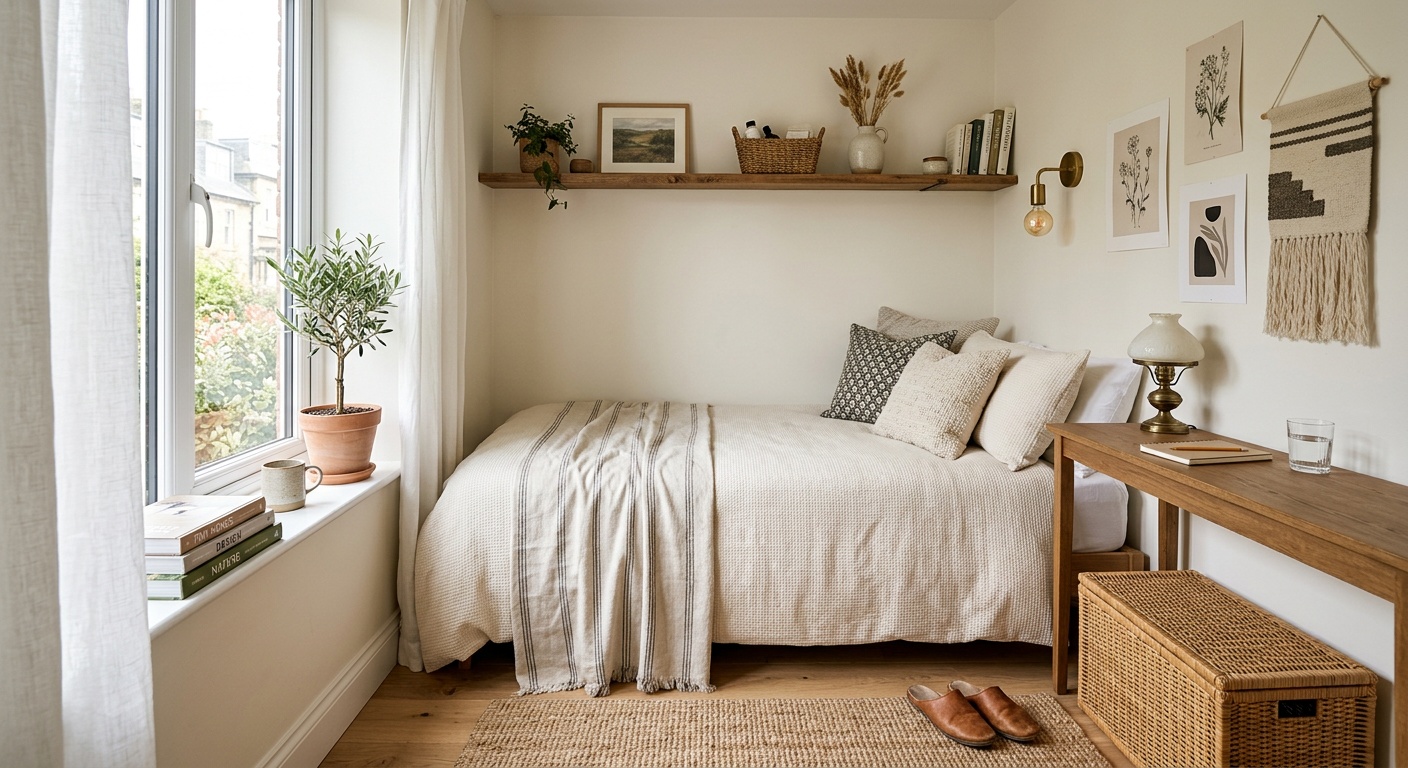
Think of it this way: a single, sculptural olive tree in a terracotta planter placed strategically in a corner does more for a small living room than a dozen mismatched succulents scattered across every surface. The approach emphasizes quality over quantity, and intentionality over decoration.
Key elements of biophilic minimalism for small homes include:
- Living walls and vertical gardens — These use wall space rather than floor space, adding lush greenery without sacrificing square footage
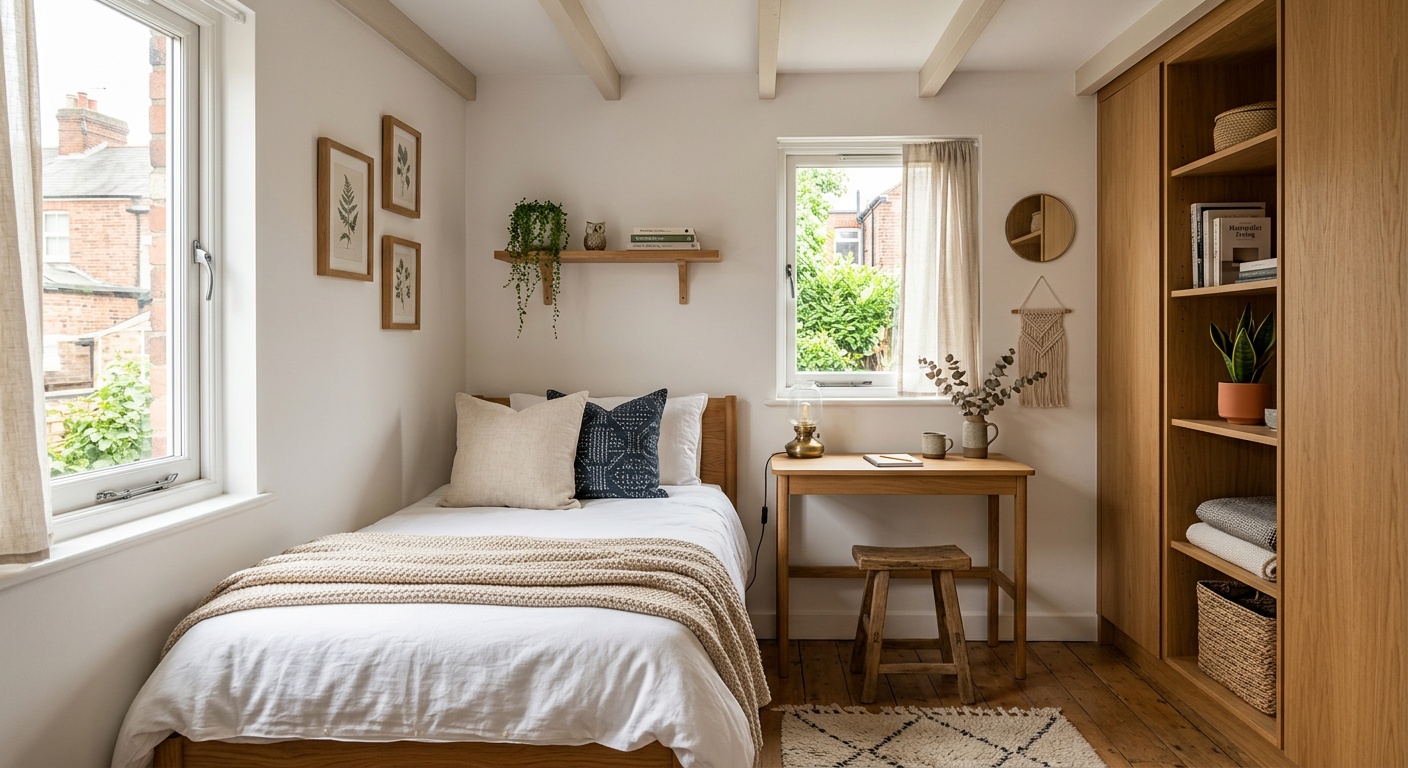
- Natural material surfaces — Linen, rattan, raw wood, stone, and jute textures bring warmth and tactile richness to compact rooms
- Maximized natural light — Strategic mirror placement, sheer curtains, and light-filtering design to amplify daylight
- Water features — Compact tabletop fountains that add ambient sound and visual calm
- Earthy, organic forms — Furniture and décor with curved, asymmetric shapes inspired by nature rather than rigid geometry
Case Study: A 480 sq ft Brooklyn Studio
Interior designer Mara Leventhal transformed a 480 sq ft Brooklyn studio in late 2025 using pure biophilic minimalism principles. She replaced the previous tenant’s cluttered bookshelves with a single floor-to-ceiling living wall panel on the main feature wall, installed linen Roman blinds, and chose furniture in raw oak and cream boucle. The result? Residents consistently describe the apartment as feeling “expansive and calming,” and the listing photos went viral on design platforms. The renovation cost was $14,800 — a fraction of what a structural expansion would have run.
Pro Tip: You don’t need a full renovation to implement biophilic minimalism. Start by removing five decorative items you don’t love and replacing them with one meaningful natural element. The subtraction is often more powerful than the addition.
Trend 2: Multifunctional Architecture & Transformable Furniture
This is arguably the most practically impactful trend on this list. In 2026, multifunctional furniture has moved far beyond the fold-out sofa bed of the 1990s. We’re talking about design engineering that would feel at home in a NASA space module — except it looks gorgeous.
The market reflects this shift: the global transformable furniture market reached an estimated $14.2 billion in 2025, according to Grand View Research, with a projected compound annual growth rate of 7.8% through 2028. Companies like Resource Furniture, IKEA’s premium lines, and boutique manufacturers like Ori Living are making once-niche products mainstream.
The Must-Know Multifunctional Pieces of 2026
Here’s what’s actually worth investing in:
- Murphy beds with integrated desks and shelving — Modern versions fold seamlessly into the wall, and when closed, look like a handsome built-in unit
- Expandable dining tables — Tables that seat two normally and expand to eight for dinner parties, with smart counterweight mechanisms
- Modular sofa systems — Reconfigure from a chaise lounge to an L-shape to individual chairs based on the occasion
- Ottoman-storage-guest bed hybrids — A single piece that serves as seating, storage, and sleeping accommodation
- Kitchen islands on wheels — Roll them in when you need counter space, store them against a wall when you don’t
- Staircase drawers — In loft-style small homes, each stair step conceals a deep storage drawer
Case Study: A 35 sq meter Paris Apartment
A Parisian couple documented their 35 sq meter apartment redesign on social media in early 2026, working with architect Jules Arnaud. By replacing their static furniture with a Murphy bed unit, a wall-mounted fold-down dining table, and a modular sofa, they effectively “created” three functional rooms within one open-plan space. Their dining area, home office, and living room now coexist fluidly in the same footprint. The redesign cost €9,500 and eliminated the need to move to a larger (and far more expensive) apartment.
Trend 3: Warm Neutrals & Earthy Tonal Palettes
The all-white Scandinavian aesthetic that dominated small home design through the early 2020s is officially evolving. In 2026, the trend has shifted decisively toward warm neutrals and earthy tonal palettes — think terracotta, warm sand, mushroom brown, aged linen, sage green, and deep clay.
This shift matters enormously for small spaces because warm tones create a sense of coziness and intentionality that stark white often fails to deliver. White can make a space feel clinical rather than spacious; warm neutrals make it feel curated and lived-in.
According to Pantone’s 2026 Color Insights report, the palette family of “warm organic neutrals” saw a 43% increase in adoption among residential interior projects compared to 2024 data. Paint brand Farrow & Ball reported that their “Dead Salmon” and “Elephant’s Breath” shades were among their highest-selling products globally in 2025.
For small homes specifically, here’s how to use this trend strategically:
- Tonal layering — Use three shades of the same color family (light, medium, deep) to create depth and dimension without visual chaos
- Accent walls in deep earthy tones — A single wall in deep terracotta or forest sage creates a focal point that makes the room feel architecturally interesting
- Warm wood tones — Pair earthy wall colors with walnut, oak, or bamboo furniture for a cohesive, grounded look
- Textured neutrals — Layer linen cushions, wool throws, and rattan accessories to add visual richness without clutter
Trend 4: Vertical Living & Wall-Integrated Storage
Most people design their rooms horizontally — they think about floor plans and furniture arrangements at eye level. In 2026, the smartest small home designers are thinking vertically. Your walls are an enormous, underutilized canvas, and ceiling height is one of your greatest assets.
Wall-integrated storage solutions have become increasingly sophisticated. We’re no longer talking about a few floating shelves. Today’s vertical living solutions include:
- Floor-to-ceiling bookshelves with integrated lighting and rolling library ladders
- Pegboard systems adapted from workshops into stylish kitchen and entryway solutions
- Magnetic walls in kitchens and home offices for flexible, reconfigurable storage
- Hanging pot racks and suspended shelving in kitchen zones that free up counter and cabinet space
- Elevated bed platforms with storage beneath — in some designs, the entire sleeping area is a raised loft zone, leaving the ground level completely open
A key insight from certified interior designer Priya Khanna, who specializes in micro-homes in Mumbai and London: “Most clients come to me having used maybe 40% of their vertical space. When we unlock the full height of a room with integrated wall solutions, it’s not just storage we’re creating — we’re changing the entire spatial experience.”
Trend 5: Smart Home Tech That Actually Saves Space
Technology integration in home design has been hyped for years, but in 2026, we’ve finally reached the point where smart home technology genuinely earns its place in small spaces — both functionally and aesthetically. The key word is integration. Visible tech gadgets and tangled cords are the enemy of small home design. The trend is toward seamlessly embedded, architecturally invisible technology.
Practical smart tech worth considering for small homes in 2026:
- Smart lighting systems — Tunable LED systems that shift from cool daylight tones for productivity to warm amber for evening relaxation, entirely changing the perceived atmosphere of a room without changing anything physical
- Under-floor heating — Eliminates the need for radiators and baseboard heating units, freeing up wall and floor space
- Voice-activated blinds and curtains — Reduces the need for window hardware and provides precise light control
- Built-in wireless charging surfaces — Integrated into tables, countertops, and nightstands, eliminating charging cables
- Compact all-in-one appliances — Combination washer-dryers, steam oven-microwave hybrids, and countertop dishwashers replace multiple bulkier units
Trend 6: Japandi & Wabi-Sabi Fusion
Japandi — the blending of Japanese minimalism and Scandinavian design principles — has been trending since 2023, but in 2026 it has deepened into something richer: a genuine incorporation of the Japanese philosophy of wabi-sabi. Wabi-sabi embraces imperfection, transience, and the beauty of natural aging. For small homes, this is a liberating philosophy.
Instead of chasing an Instagram-perfect, magazine-ready space, wabi-sabi encourages you to find beauty in the worn edge of a wooden table, the asymmetry of a handmade ceramic bowl, the faded quality of aged linen. This approach reduces the pressure — and the cost — of constant updating and replacing. It’s deeply sustainable, too.
For small homes, Japandi-wabi-sabi fusion translates into:
- Unfinished or live-edge wooden furniture that celebrates natural imperfections
- Handmade ceramics and artisan objects with slight irregularities
- Negative space as a design element — deliberately empty areas of a room are as important as filled ones
- Natural fiber textiles in undyed or lightly dyed states
- Muted, asymmetric arrangements rather than perfectly symmetrical décor
Common Challenges & How to Overcome Them
Challenge 1: The Storage Paradox
Many small home owners obsessively add more storage solutions, only to find their home feels even more cluttered and oppressive. The paradox? More storage often leads to more stuff. The solution isn’t more storage — it’s intentional curation combined with strategic storage. Before adding a single shelf or cabinet, do a ruthless edit of your possessions. Interior designers consistently report that clients who reduce their belongings by 30% before redesigning are dramatically happier with the results than those who simply add more storage to accommodate everything they own.
Challenge 2: Making Guests Comfortable Without Sacrificing Daily Life
The classic small home dilemma: you want to host people, but you can’t afford to dedicate a permanent guest room. The 2026 solution is designing for graceful flexibility. Invest in one quality sofa-bed or a dedicated Murphy bed unit rather than buying a cheap air mattress and hoping for the best. Modular furniture systems that reconfigure in minutes let your home transform for guests without looking like a staging area. The key is investing properly in two or three high-quality transformable pieces rather than buying cheap workarounds.
Challenge 3: Maintaining Visual Calm Amid Real Life
Design blogs show pristine, clutter-free spaces. Reality involves kids’ backpacks, mail piles, and workout equipment. The solution is designing for your real life, not your ideal life. This means building in concealed homes for every recurring item in your life — a specific hook for every bag, a drawer for every type of mail, a dedicated zone for every activity. When everything has a home, the default state of your space is orderly, requiring minimal maintenance to restore after daily use.
Trend Comparison at a Glance
| Design Trend | Cost Level | DIY Friendly | Impact on Space Feel | Best For |
|---|---|---|---|---|
| Biophilic Minimalism | Low–Medium | Yes | Calming, expansive | Urban apartments |
| Multifunctional Furniture | Medium–High | Partially | Dramatically freeing | Studios, micro-homes |
| Warm Neutral Palettes | Low | Yes | Warm, inviting | All small home types |
| Vertical Living | Low–Medium | Yes | Spacious, architectural | High-ceiling homes |
| Japandi / Wabi-Sabi | Low–Medium | Yes | Serene, timeless | All small home types |
2026 Small Home Design Trend Adoption Rates
Based on 2025–2026 Houzz & ASID industry surveys (% of small home renovation projects)
Frequently Asked Questions
Q: What’s the single most impactful change I can make to a small home on a limited budget?
If you have $500 or less to work with, the highest-impact change is almost always a fresh coat of paint in a warm neutral tone combined with a serious decluttering session. Paint transforms a room’s atmosphere entirely, and removing clutter costs nothing. These two actions together address the core visual problems in most small homes — visual noise and poor color temperature — before any furniture investment is made. If you have a bit more flexibility, adding targeted lighting (a floor lamp or under-cabinet LED strips) is the next highest-impact upgrade.
Q: Is it worth hiring an interior designer for a small home, or is it overkill?
For a genuinely small space — say, under 700 square feet — a professional consultation is often more valuable than in larger homes, not less. Why? Because the margin for error is narrower. One wrongly sized sofa can make an entire living room nonfunctional. Many designers now offer one-time consultation packages ranging from $250 to $800 that include a room layout review and shopping list. This targeted investment typically saves homeowners from expensive mistakes. Virtual design services have also made professional guidance far more accessible and affordable in 2026 than ever before.
Q: How do I make a small bedroom feel luxurious rather than cramped?
The key to a luxurious small bedroom lies in three elements: quality bedding, strategic lighting, and disciplined restraint. Invest in the best quality duvet and pillow covers you can afford — these occupy the dominant visual space of any bedroom. Layer your lighting with a combination of ambient ceiling light, bedside reading lamps, and optional LED strip lighting behind a bed headboard for a hotel-like glow. Finally, remove everything from the bedroom that isn’t either functional to sleeping or genuinely beautiful. Many people store items in bedrooms by default; treating this room as a sanctuary requiring an “entrance fee” of intentionality changes how it feels entirely.
Your Small Space Transformation Roadmap
Here’s the straight talk: you don’t need a larger home. You need a smarter one. The trends we’ve explored aren’t just aesthetic preferences — they’re proven frameworks for solving the real challenges of compact living. And the good news is you don’t need to implement all six trends simultaneously. In fact, please don’t. The most successful small home transformations happen incrementally and intentionally.
Here’s your practical roadmap for moving forward:
- Start with subtraction, not addition. Spend one weekend identifying and removing everything in your home that doesn’t serve a genuine function or bring real joy. This single step often creates more spatial impact than any renovation.
- Choose one palette direction. Pick a warm neutral color family that resonates with you and commit to it across your main living areas. Consistency creates calm.
- Audit your vertical space. Walk through each room and photograph your walls from floor to ceiling. You’ll almost certainly identify underused wall real estate that could be working harder for you.
- Identify your single biggest pain point. Is it lack of storage? Difficulty hosting guests? A dark, closed-in feeling? Prioritize the one trend on this list that most directly solves your specific problem and invest there first.
- Introduce one biophilic element. A single considered plant, a natural material textile, or improved access to natural light can shift the entire emotional quality of a room.
The broader implication here is significant: as housing costs continue to rise globally and urban density increases, the ability to create genuinely beautiful, functional small homes isn’t just a design skill — it’s a quality-of-life skill. The people who master it in 2026 will be ahead of a curve that’s only going to steepen.
So here’s the question to sit with: Which one of your rooms, if transformed by even a single trend from this list, would most improve how you feel in your home every single day? Start there. The rest will follow.