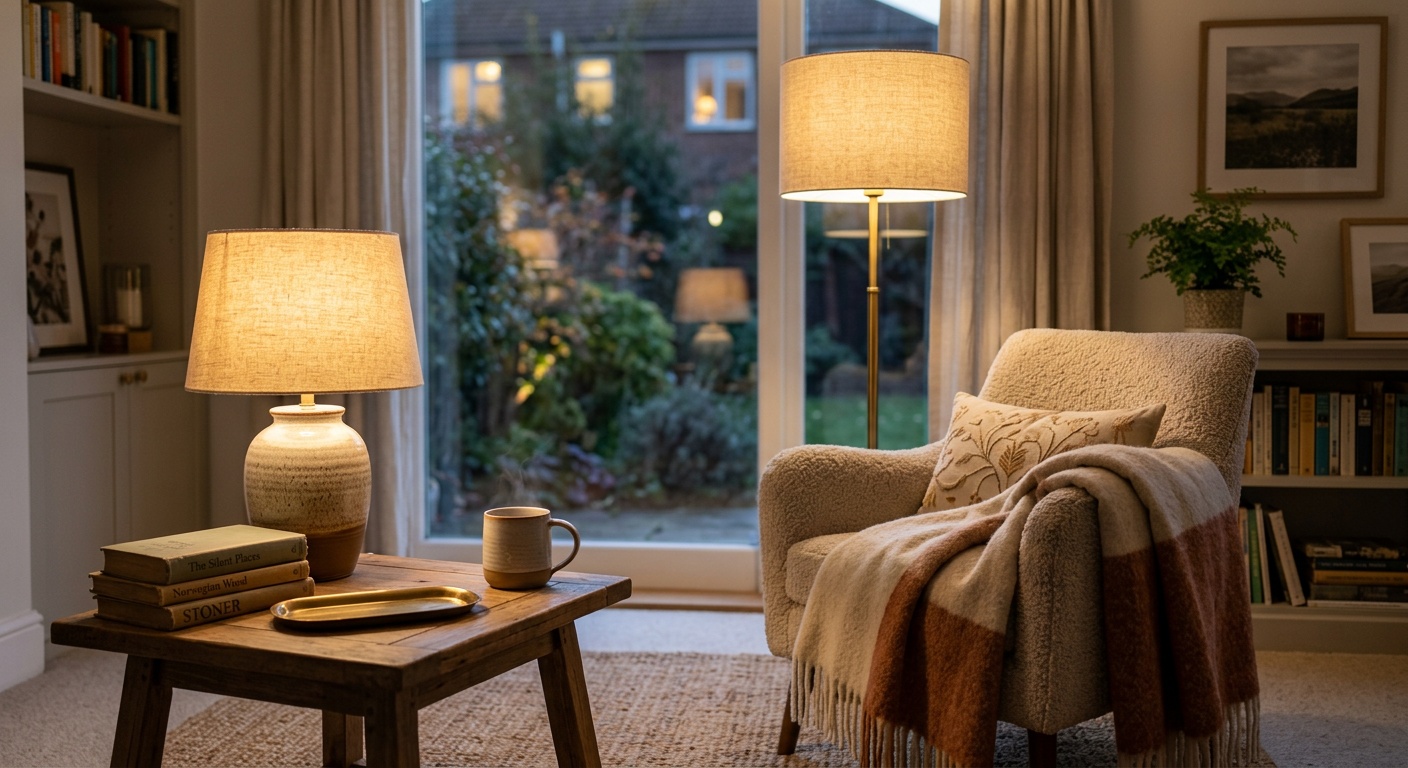
Cozy Living Room Lighting Ideas to Transform Your Space
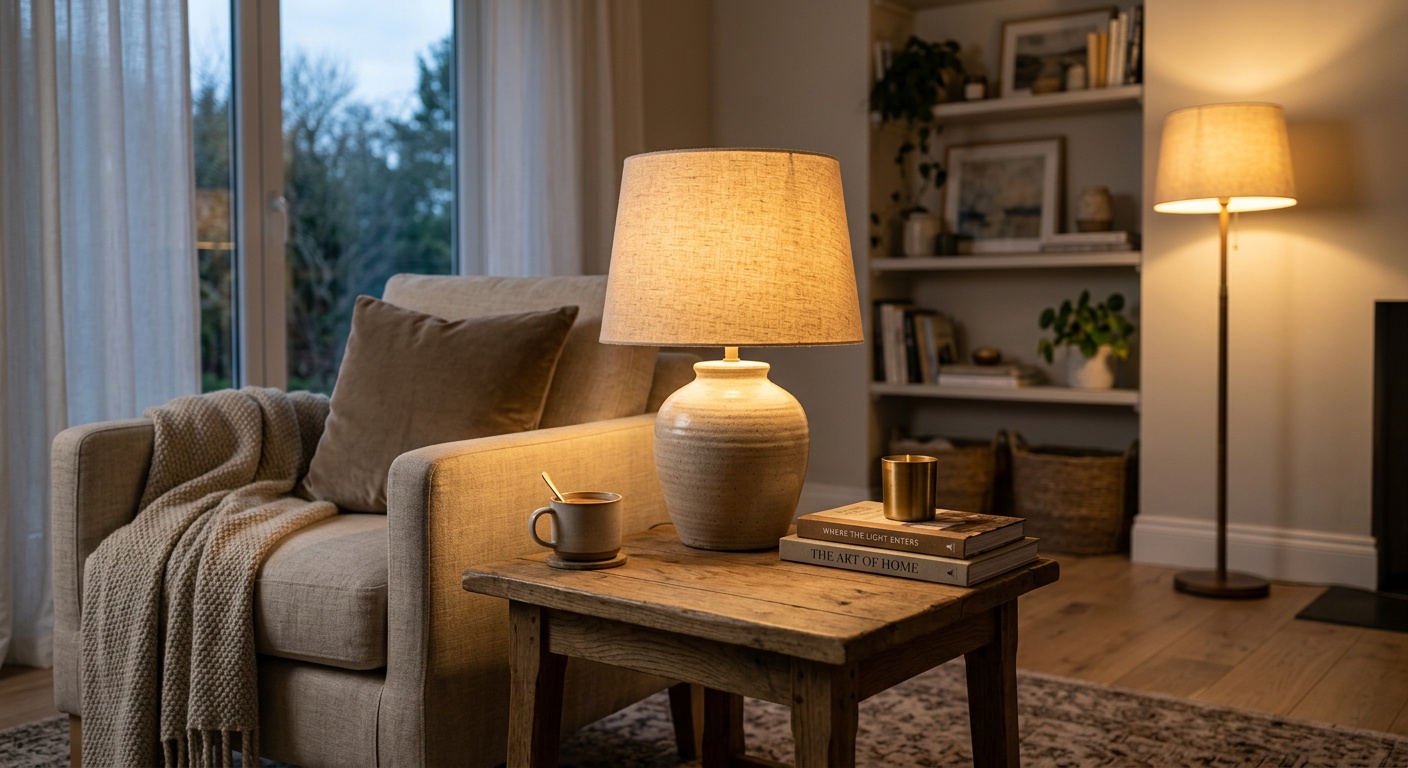
Cozy Living Room Lighting Ideas to Transform Your Space
Reading time: 12 minutes
Ever walked into a living room that just felt right? Not too bright, not too dim — just warm, inviting, and effortlessly comfortable. Chances are, you weren’t reacting to the furniture or the paint color. You were reacting to the lighting.
Lighting is the invisible hand that shapes how a room feels. Yet it’s one of the most overlooked elements in home design. Most people settle for a single overhead fixture and call it a day — and then wonder why their living room never quite feels like the cozy sanctuary they imagine.
Here’s the straight talk: creating a cozy living room isn’t about expensive renovations or designer furniture — it’s about understanding how light works and layering it strategically. Whether you’re renting an apartment, refreshing a family home, or designing from scratch in 2026, this guide will walk you through every practical step you need.
Table of Contents
- Why Lighting Is the Foundation of Coziness
- The Art of Layering Light
- Choosing the Right Bulbs: A 2026 Guide
- Smart Lighting Trends Transforming Homes in 2026
- 3 Common Lighting Mistakes (And How to Fix Them)
- Real-World Examples: Cozy Lighting Transformations
- Lighting Type Comparison Table
- Homeowner Satisfaction by Lighting Strategy
- Frequently Asked Questions
- Your Cozy Lighting Roadmap: Next Steps
Why Lighting Is the Foundation of Coziness
Before we dive into fixtures and bulb temperatures, let’s talk about why lighting matters so profoundly. According to a 2025 Houzz Home Design Report, 74% of homeowners who renovated their living spaces said that improving lighting had a greater impact on how “comfortable” a room felt than any other single change — including new flooring or repainting walls.
That’s not surprising when you understand the psychology at play. Warm, lower-intensity light signals safety and rest to the human brain — evolutionary echoes of firelight. Harsh overhead fluorescents, on the other hand, trigger alertness and mild stress, the same biological response triggered by midday sunlight.
Think about it this way: a dimly lit corner with a warm lamp tells your nervous system “you’re home.” A single bright overhead bulb tells it “you’re at work.”
In 2026, with more people working hybrid schedules and spending increased time at home, the living room has become a multi-functional space — a place to relax, socialize, work occasionally, and unwind. That means your lighting strategy needs to be flexible, layered, and intentional.
The Science Behind Warm vs. Cool Light
Light is measured in Kelvins (K), which describes color temperature — and this single metric has an outsized impact on how cozy a room feels:
- 2700K–3000K: Warm white — the sweet spot for cozy living rooms. Think candlelight and incandescent bulbs.
- 3500K–4100K: Neutral white — works in kitchens and bathrooms, feels clinical in a living room.
- 5000K–6500K: Daylight or cool white — energizing but absolutely not cozy. Best reserved for home offices or garages.
Pro Tip: When in doubt, always select bulbs rated between 2700K and 3000K for your living room. This single decision will improve the feel of your space more than almost any furniture change.
The Art of Layering Light
Professional interior designers don’t think in terms of “lights” — they think in terms of layers. The layered lighting approach is the single most powerful technique you can use, and it’s completely accessible regardless of your budget.
There are three primary layers, and each serves a distinct purpose:
Layer 1: Ambient Lighting (The Base Layer)
Ambient lighting is your room’s general illumination — the foundation that allows you to navigate and see clearly. In a living room, this is typically provided by:
- Recessed ceiling lights (can lights)
- Flush-mount or semi-flush ceiling fixtures
- Chandeliers or pendant lights
- Large floor lamps with upward-facing shades
The key insight most people miss: ambient light should be dimmable. Installing a simple dimmer switch (a $15–$30 upgrade in 2026) transforms a room from flat and institutional to warm and adaptable. When your ceiling lights are dimmed to 40–60% capacity during evening hours, the room immediately feels more intimate.
Layer 2: Task Lighting (The Functional Layer)
Task lighting serves specific functional purposes — reading, crafting, working on a laptop. In a living room, this includes:
- Reading lamps positioned beside armchairs or sofas
- Adjustable arc floor lamps that can be directed over a seating area
- Table lamps on end tables
- Swing-arm wall sconces beside seating areas
Task lighting doesn’t have to be utilitarian — quite the opposite. A beautifully shaped floor lamp or an artisan table lamp can be both functional and a statement piece. Look for lamps with warm-toned shades (ivory, linen, amber) that diffuse the light softly rather than directing it harshly.
Layer 3: Accent Lighting (The Mood Layer)
This is where the magic of coziness truly happens. Accent lighting creates depth, highlights features you love, and adds visual warmth without contributing significant brightness. Examples include:
- LED strip lights behind a TV console or beneath a shelf
- Picture lights illuminating artwork or gallery walls
- Candles or flameless LED candles on coffee tables and mantels
- Fairy lights or string lights woven through bookshelves
- Edison bulb pendants that double as decorative elements
Accent lighting is low-cost, high-impact. A $20 string of warm LED fairy lights draped across a bookshelf can completely transform the ambiance of a corner that previously felt flat and forgettable.
Choosing the Right Bulbs: A 2026 Guide
The bulb landscape has changed dramatically over the past decade. In 2026, LED technology dominates, but not all LEDs are created equal — and the differences matter significantly for creating coziness.
Here’s what to look for beyond color temperature:
- CRI (Color Rendering Index): Aim for CRI 90+ for living rooms. Higher CRI means colors look more natural and vibrant, which makes your entire room — including fabrics, artwork, and skin tones — look richer and more inviting.
- Lumen output: For a cozy living room, you don’t need blinding brightness. Aim for 1,500–3,000 total lumens for an average living room (roughly 15×20 ft), distributed across multiple sources.
- Dimmability: Not all LEDs dim smoothly. Look specifically for “dimmable” labeling and pair them with compatible dimmer switches to avoid flickering.
- Filament-style LEDs: These have become enormously popular for their visual warmth. They mimic the aesthetic of Edison bulbs while using a fraction of the energy.
In 2025, the U.S. Department of Energy reported that LED lighting now accounts for over 82% of all residential light bulb sales — a complete market transformation from just ten years prior. The average household saves approximately $225 per year by switching fully to LED lighting.
Smart Lighting Trends Transforming Homes in 2026
Smart lighting has moved from novelty to necessity for many homeowners. In 2026, the market for smart home lighting is valued at over $18.4 billion globally (up from $13.2 billion in 2023), and the technology has become dramatically more user-friendly and affordable.
Here’s how smart lighting specifically enhances coziness in your living room:
- Scene-setting presets: Programs like “Movie Night” (dim, warm, bias lighting behind TV), “Relaxation” (ultra-warm, low intensity), and “Hosting” (slightly brighter, full room coverage) can be activated with a single voice command or tap.
- Circadian rhythm modes: Brands like Philips Hue, LIFX, and Govee now offer automatic color temperature shifting throughout the day — warmer in the evening to support natural melatonin production and better sleep.
- Geofencing activation: Your lights can detect when you’re approaching home and automatically set a warm, welcoming scene before you even open the door.
- Matter protocol compatibility: Since 2024, the Matter smart home standard has allowed seamless integration across platforms — your Alexa, Google Home, and Apple HomeKit devices all work together without ecosystem battles.
Budget-conscious option: You don’t need to invest in a full Philips Hue system to enjoy smart lighting. Smart plugs ($8–$15 each) combined with dimmable warm LED lamps can be voice-controlled through any smart speaker — a fantastic entry-level approach for renters or those testing the concept.
3 Common Lighting Mistakes (And How to Fix Them)
Even well-intentioned decorators fall into predictable lighting traps. Recognizing these mistakes is the first step to avoiding them.
Mistake #1: Relying Solely on Overhead Lighting
This is the most pervasive lighting mistake in residential spaces. A single ceiling fixture creates flat, shadowless illumination that makes even beautifully furnished rooms feel like waiting rooms. The fix? Add at least two additional light sources at varying heights — a floor lamp in one corner and table lamps on end tables create immediate depth and warmth. As a rule of thumb: if you’re relying on more than one ceiling fixture to light your living room, you probably don’t have enough floor and table lamps.
Mistake #2: Using the Wrong Color Temperature
Walking into a hardware store and grabbing the first “warm” bulbs you see without checking the Kelvin rating is a recipe for disappointment. Many bulbs marketed as “soft white” can be as high as 3500K — noticeably cooler than true warm white. Always check the Kelvin number on the box. For maximum coziness, 2700K is the gold standard. Some designers even go as low as 2400K for an almost candlelight effect in particularly intimate settings.
Mistake #3: Ignoring Dimmer Switches
Installing a dimmer switch is one of the highest-return investments you can make in your living room — typically $15–$40 for the hardware plus a simple DIY installation or a brief electrician visit. Without dimmers, you’re locked into a binary on/off choice that offers zero flexibility. A dimmer lets you modulate ambiance in real time — bright for reading, medium for socializing, low for movie watching, and ultra-low for winding down. If you’re renting and can’t modify switches, smart bulbs with app-based dimming offer the same flexibility without any permanent changes.
Real-World Examples: Cozy Lighting Transformations
Case Study 1: The Single-Bulb Apartment in Chicago
Maya, a 31-year-old product manager living in a 650-square-foot Chicago apartment, described her living room as “a place I only used to pass through.” The culprit? A single 60W equivalent LED in a basic ceiling fixture rated at 4000K — cool, harsh, and institutional.
Her three-part transformation cost under $150:
- Replaced the ceiling bulb with a 2700K warm LED and added a $25 dimmer switch
- Added a secondhand arc floor lamp with a cream linen shade, fitted with a 2700K filament LED
- Ran a string of warm fairy lights across her bookshelf behind her sofa
“I genuinely didn’t recognize my own apartment,” she told a home décor forum in early 2026. “I went from never wanting to sit in there to spending my entire weekends in that room. Same furniture, completely different feeling.”
Case Study 2: The Family Home Refresh in Austin
The Nguyen family’s living room in Austin, Texas was suffering from the opposite problem — too many mismatched light sources with no cohesive strategy. They had recessed lights at 5000K, a table lamp with a 3000K bulb, and a floor lamp with a 4000K bulb. The visual cacophony made the space feel chaotic and unsettled.
Their designer recommended a “bulb audit” — replacing every bulb in the room with a consistent 2700K option — before adding any new fixtures. The result was dramatic. The family then invested in smart bulbs across all sources, allowing them to create preset scenes for different evening activities. Total investment: approximately $280, including a smart hub and six Govee smart bulbs.
The lesson: consistency in color temperature is as important as the fixtures themselves.
Lighting Type Comparison Table
| Lighting Type | Coziness Factor | Cost Range (2026) | Best Use | Dimmable? |
|---|---|---|---|---|
| Warm LED Table Lamp | ⭐⭐⭐⭐⭐ | $20–$150 | Side tables, reading nooks | Yes (with dimmable bulb) |
| Recessed Ceiling Lights | ⭐⭐⭐ | $15–$60/fixture | Base ambient layer | Yes (requires compatible dimmer) |
| LED Strip / Bias Lighting | ⭐⭐⭐⭐ | $15–$80 | Behind TV, under shelves | Yes (most models) |
| Arc Floor Lamp | ⭐⭐⭐⭐⭐ | $60–$300 | Seating areas, reading spots | Yes (built-in dimmer common) |
| Fairy / String Lights | ⭐⭐⭐⭐ | $10–$40 | Shelves, mantels, frames | Sometimes |
Homeowner Satisfaction by Lighting Strategy
Based on a 2025 residential design survey of 1,200 U.S. homeowners, participants rated their satisfaction with room ambiance after implementing different lighting strategies. The results clearly highlight the value of layering:
*Percentage represents homeowners who rated their room ambiance as “very satisfying” or “excellent”
Specific Cozy Lighting Ideas Worth Trying
Let’s get granular. Beyond the structural framework of layering, here are specific ideas that consistently deliver outsized coziness returns:
The Warm Corner Strategy
Identify the corners of your living room — these are the areas that most often feel dark, abandoned, and cold. A single floor lamp with a warm 2700K bulb placed in a corner immediately “activates” that space, creating what lighting designers call a visual anchor. The human eye is naturally drawn to light, and having a warm glow in a corner draws attention inward and makes the room feel wrapped and contained rather than exposed.
Fireplace Simulation with Flameless Candles
Not every living room has a fireplace, but you can approximate that primal sense of hearth-warmth with quality flameless LED candles. In 2026, the technology has advanced to the point where high-end flameless candles (brands like Luminara and Chesapeake Bay) produce a genuinely convincing flickering effect. Cluster three to five on your coffee table or mantel at varying heights for a fireplace-adjacent atmosphere that’s safe for households with children and pets.
Bias Lighting Behind Your Television
One of the most practical and affordable transformations you can make is adding LED strip lights behind your television. This technique, called bias lighting, serves a dual purpose: it reduces eye strain during viewing by softening the contrast between screen and dark surroundings, and it adds a beautiful warm ambient glow that transforms your TV from a black rectangle into a focal feature. Govee, Philips Hue Play, and Nanoleaf all offer excellent TV-optimized bias lighting systems ranging from $25 to $120 in 2026.
The Linen Shade Upgrade
Here’s an often-overlooked detail: the material of your lampshade has an enormous impact on light quality. White plastic shades produce a harsh, directional light. Linen, cotton, and parchment shades diffuse light softly through the fabric, casting warm, gentle illumination that feels organic and cozy. If you have lamps with white plastic shades, consider a simple shade swap — replacement shades are available for $15–$60 and represent a genuinely surprising transformation in light quality.
Layering with Natural Light Integration
Cozy lighting isn’t just about artificial sources. In 2026, smart window treatments that coordinate with your lighting system represent the frontier of ambient design. Automated sheer curtains can be programmed to filter harsh afternoon sunlight while allowing the warm golden tones of early morning and late afternoon to enhance your artificial lighting scheme. Even without automation, choosing warm-toned sheer curtains over cool white blinds changes how natural light enters and interacts with your space.
Frequently Asked Questions
What is the best color temperature for a cozy living room?
The ideal color temperature for a cozy living room is between 2700K and 3000K, described as “warm white” on most bulb packaging. This range mimics the warm, golden quality of incandescent bulbs and candlelight, triggering a physiological sense of relaxation and comfort. Avoid anything above 3500K in a living room — it shifts toward cooler, more clinical tones that undermine the cozy atmosphere you’re trying to create. If you want an even warmer, more intimate feel, some designers recommend 2400K for specific accent lamps in a reading nook or beside a sofa.
How many light sources does a living room need to feel cozy?
As a general guideline, a living room should have a minimum of four light sources to achieve a genuinely layered, cozy atmosphere. This typically includes one ambient source (ceiling fixture or recessed lights), two task sources (floor lamp and table lamp), and at least one accent source (string lights, LED strips, or candles). For larger living rooms (over 250 square feet), six to eight sources distributed around the room will create the most comfortable and visually interesting results. Remember: multiple lower-intensity sources always feel warmer than a single powerful light.
Can I create a cozy lighting setup without rewiring or major renovations?
Absolutely — and this is great news for renters and budget-conscious homeowners. The most impactful cozy lighting changes require zero permanent modifications. Smart bulbs (which screw into any standard socket) allow dimming and color temperature control via app or voice command without touching wiring. Plug-in floor lamps, table lamps, battery-operated flameless candles, USB-powered LED strips, and plug-in wall sconces all deliver substantial ambiance upgrades without a single hole in the wall. Even replacing bulbs from cool white to warm white across all existing fixtures is a completely reversible, no-tools-required transformation that many people describe as one of the most impactful design changes they’ve ever made.
Your Cozy Lighting Roadmap: Next Steps
You now have everything you need to transform your living room from flat and uninspiring to genuinely warm and welcoming. Here’s your practical implementation roadmap:
- Conduct a bulb audit this week. Walk through your living room and check the Kelvin rating on every bulb. Replace anything above 3000K with 2700K warm LEDs. This single step alone will shift your room’s entire feeling. Budget: $15–$40.
- Add at least one floor lamp. If your living room has no floor lamp, that’s your next purchase. An arc lamp over your primary seating area creates immediate warmth and depth. Look for models with built-in dimmers and linen shades. Budget: $60–$200.
- Install a dimmer switch on your ceiling lights. If you own your home or have landlord permission, this is a one-hour DIY project with an outsized return. If you’re renting, opt for smart bulbs in your ceiling fixture instead. Budget: $15–$40.
- Add one accent layer. Choose one accent element — fairy lights on a bookshelf, LED strips behind your TV, or a cluster of flameless candles on your coffee table. This final layer is what distinguishes a “nice” room from a genuinely cozy sanctuary. Budget: $15–$60.
- Experiment and iterate. Cozy lighting is deeply personal. Spend two weeks with your new setup and pay attention to which moments and configurations feel most right. Then refine accordingly.
As smart home technology continues to evolve through 2026 and into 2027, the intersection of human-centric lighting design and AI-driven automation will make personalized cozy atmospheres even more accessible and effortless. The homes of the near future will adapt their lighting to your mood, schedule, and even biological rhythms — but the fundamental truth remains unchanged: warm, layered, intentional light is the bedrock of a space that feels like home.
Here’s a question worth sitting with: if lighting has this much power to transform how you feel in your own home, what other small, intentional changes might be waiting to reshape your everyday experience? Your living room is the perfect place to start finding out.