Mid Century Modern Decor Ideas for a Warm Inviting Home
Mid Century Modern Decor Ideas for a Warm, Inviting Home
Reading time: 14 minutes
Ever walked into a room and felt instantly at ease — like the furniture, the light, and the space itself were conspiring to make you feel welcome? Chances are, mid century modern design had something to do with it. This beloved aesthetic, born in the post-war optimism of the 1940s and 50s, has refused to fade into nostalgia. Instead, it’s evolved into one of the most enduring and adaptable interior design movements of our time.
In 2026, mid century modern (MCM) remains a dominant force in home décor, with Google Trends data confirming it as one of the top five most searched interior design styles globally for the fourth consecutive year. But here’s the thing: recreating this look isn’t just about buying a tulip table or hanging a sunburst clock. It’s about understanding why this style works — and then making it feel genuinely yours.
Well, here’s the straight talk: Mid century modern isn’t a museum exhibit. It’s a living, breathing design philosophy that, when done right, transforms any home into a warm sanctuary that feels simultaneously timeless and fresh.
Table of Contents
- What Makes Mid Century Modern Tick?
- Core Design Elements You Need to Know
- Choosing the Right Color Palette
- Iconic Furniture Choices and How to Source Them
- Materials, Textures, and the Art of Warmth
- Room-by-Room MCM Inspiration
- Common Challenges and How to Overcome Them
- Real-World Transformations: Two Inspiring Examples
- MCM vs. Other Popular Styles: A Comparative Look
- 2026 Interior Design Trend Popularity
- Frequently Asked Questions
- Your MCM Roadmap: Bringing It All Together
What Makes Mid Century Modern Tick?
Mid century modern design emerged primarily between 1945 and 1969, shaped by architects and designers like Charles and Ray Eames, Eero Saarinen, Florence Knoll, and George Nelson. The style was a direct reaction to post-war abundance — designers embraced new materials like molded plywood, fiberglass, and plastic alongside natural wood to create furniture that was both functional and sculpturally beautiful.
But what makes MCM so persistently appealing in 2026? It solves a fundamental human problem: the tension between style and livability. Unlike maximalist baroque or the cold sterility of extreme minimalism, mid century modern threads a needle — it offers clean lines without clinical coldness, warmth without clutter, and personality without chaos.
As interior designer Justine Sullivan noted in Architectural Digest‘s 2025 trend forecast: “Mid century modern endures because it was designed for real people living real lives. There’s nothing precious about an Eames chair — it invites you to sit, to stay, to live in the space.”
Quick Scenario: Imagine you’ve just moved into a 1960s ranch-style home with good bones but a confusing mix of dated finishes and mismatched furniture. Where do you even begin? That’s exactly the kind of challenge this guide will help you navigate — strategically and without unnecessary expense.
Core Design Elements You Need to Know
The Foundational Principles of MCM Design
Before you spend a single dollar on furniture or paint, internalize these foundational principles. They’ll save you from costly mistakes and guide every decision you make:
- Form follows function: Every piece should earn its place. If it looks good but serves no purpose, reconsider.
- Clean, uncluttered lines: Furniture features low profiles, tapered legs, and geometric silhouettes. Fussiness is the enemy.
- Organic meets geometric: MCM constantly balances angular structures with softer, nature-inspired curves.
- Indoor-outdoor connection: Large windows, natural materials, and open floor plans blur the boundary between inside and outside.
- Integration of art and furniture: Pieces are chosen as thoughtfully as artwork — because in MCM, they often are art.
What MCM Is NOT (Common Misconceptions)
Here’s where many decorators go wrong: they mistake “retro” for “mid century modern.” Not every piece from the 1950s belongs in an MCM interior. Fussy floral upholstery, ornate wooden carvings, or heavy drapery all belong to different mid-century traditions. Equally, ultra-minimal Scandinavian design — though a cousin — prioritizes utility over the sculptural expressiveness that defines true MCM.
Pro Tip: When evaluating a potential piece, ask yourself: Does this feel functional yet artistic? Does it have clean lines but some organic warmth? If both answers are yes, you’re on the right track.
Choosing the Right Color Palette
Color is where mid century modern gets truly exciting — and where many first-timers feel intimidated. The good news? MCM has a surprisingly forgiving and intuitive palette once you understand its logic.
The MCM Color Framework
Think of MCM color in three layers:
- Neutral foundation: Warm whites, creamy off-whites, soft greys, and tan — these are your walls and larger upholstered pieces. In 2026, warm whites with a slight yellow or peach undertone (like Benjamin Moore’s “Navajo White” or Sherwin-Williams’ “Antique White”) are having a particular resurgence.
- Earthy mid-tones: Walnut browns, olive greens, mustard yellows, and burnt oranges. These typically appear in wood furniture, accent chairs, and textiles. These colors connect the interior to nature and give MCM its characteristic warmth.
- Bold accent pops: Teal, burnt sienna, cobalt blue, or avocado green. Used sparingly on a single piece of furniture, a throw pillow set, or an artwork, these accents inject personality without overwhelming.
A 2025 survey by the American Society of Interior Designers (ASID) found that 67% of homeowners who self-identified as MCM enthusiasts cited “warmth through color” as the most important factor in achieving the look successfully. This underscores a critical point: warmth is not an accident in MCM — it’s engineered.
Practical tip: If you’re nervous about bold color, start with a mustard yellow throw blanket or a set of burnt orange cushions. These are low-commitment, high-impact changes that immediately shift a room’s mood toward that quintessential MCM warmth.
Iconic Furniture Choices and How to Source Them
Furniture is the heart of any MCM interior. The right pieces anchor the aesthetic and can even function as conversation starters. Here are the most iconic categories:
Signature Pieces Worth Investing In
- The Eames Lounge Chair and Ottoman: Arguably the most iconic MCM piece ever created. An authentic Herman Miller version retails for approximately $5,500–$6,200 in 2026, but high-quality reproductions exist in the $400–$900 range. If you can only invest in one statement piece, this is it.
- Tulip Table (Eero Saarinen): Characterized by its single pedestal base and round top, this piece works beautifully in dining rooms and kitchens. Authentic Knoll versions run $3,000+; well-crafted alternatives start around $500.
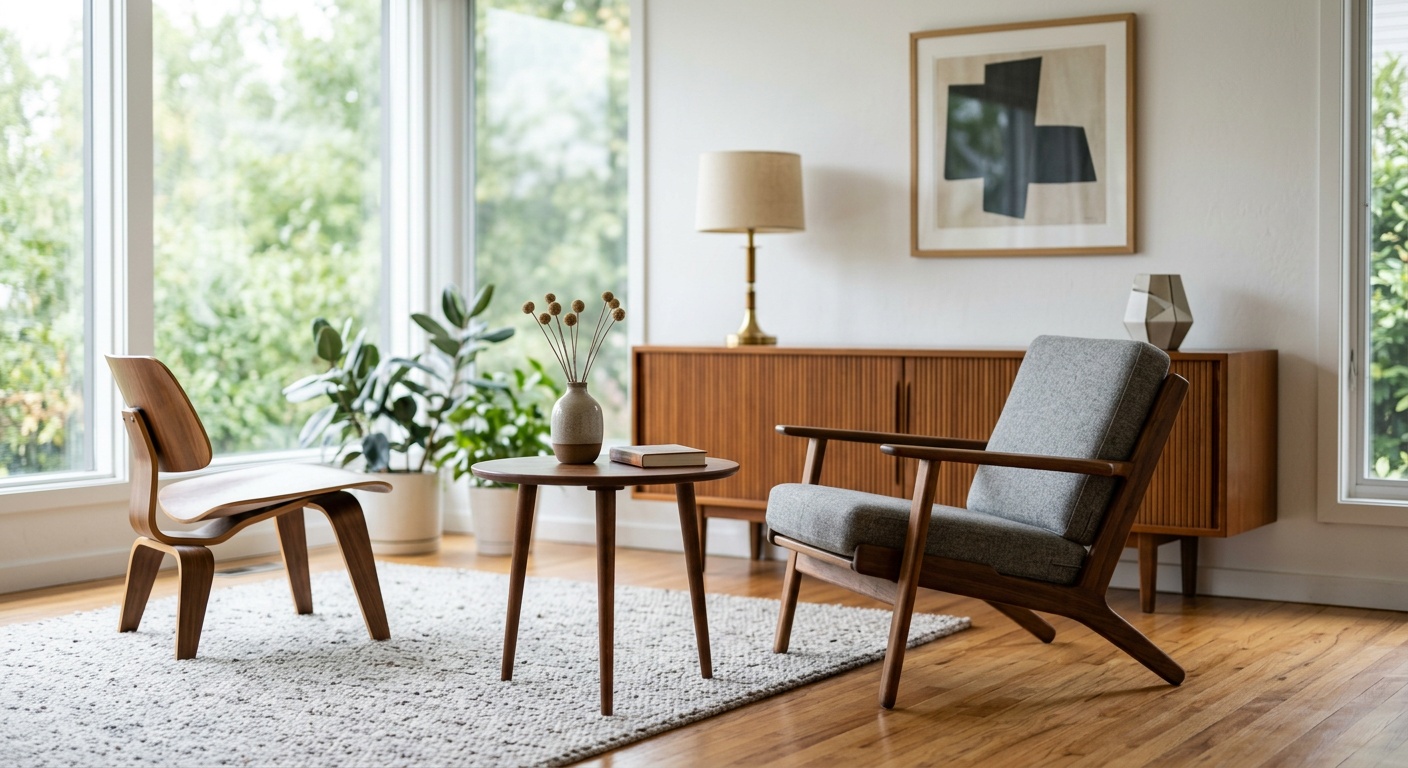
- Credenza or sideboard with tapered legs: A walnut-finish sideboard with hairpin or tapered legs doubles as both storage and a sculptural focal point. Vintage pieces can often be found at estate sales for $200–$600.
- Tulip or Sputnik chandelier: Lighting in MCM is deliberate and dramatic. A Sputnik-style chandelier immediately signals the aesthetic while bathing a room in warm, diffused light.
- Platform sofa with low profile: Low-slung sofas with clean lines in warm fabrics like burnt orange velvet, mustard wool, or tan leather are cornerstones of MCM living rooms.
Smart Sourcing Strategies for 2026
You don’t need an unlimited budget to curate an authentic MCM interior. Here’s a practical roadmap for sourcing at every price point:
- Vintage and antique markets: Estate sales, flea markets, and platforms like Chairish or 1stDibs offer genuine vintage pieces. In 2026, interest in circular design has made these platforms more popular than ever, but also more competitive. Set alerts and act quickly.
- Mid-market retailers: West Elm, Article, and Joybird consistently offer MCM-inspired pieces at accessible prices. Article’s “Sven” sofa, for instance, has become a community favorite for MCM living rooms at around $1,299.
- DIY restoration: A tired wooden dresser with replaced hardware and fresh tung oil can be transformed into a gorgeous MCM credenza for under $150. This approach also aligns with the growing sustainability ethos in 2026’s design community.
Materials, Textures, and the Art of Warmth
If color sets the mood, materials seal it. MCM’s distinctive warmth comes from its deliberate layering of natural and manufactured materials in ways that feel cohesive rather than chaotic.
Primary materials in MCM interiors include:
- Walnut and teak wood: The dark, rich grain of walnut is perhaps the single most iconic MCM material. It appears in furniture, wall paneling, and flooring. Teak offers similar warmth with slightly more golden tones.
- Molded plastic and fiberglass: Used in shell chairs and accent pieces, these materials celebrate the design innovation of the era without feeling cold when paired with warm textiles.
- Wool and bouclé: Upholstery in textured wool or the currently trending bouclé fabric (a 2024–2026 darling of the design world) adds tactile warmth that complements MCM’s harder surfaces.
- Brass and gold-tone metals: Used in light fixtures, cabinet hardware, and table legs, brushed brass is a signature MCM metallic that feels simultaneously vintage and contemporary.
- Terrazzo and concrete: Particularly popular in MCM-inspired bathrooms and kitchens, these materials balance organic irregularity with geometric precision.
The key principle here is contrast: a smooth walnut surface next to a textured bouclé cushion, a brass lamp against a matte white wall. MCM creates visual and tactile interest through deliberate material tension.
Room-by-Room MCM Inspiration
Living Room: The Gathering Space
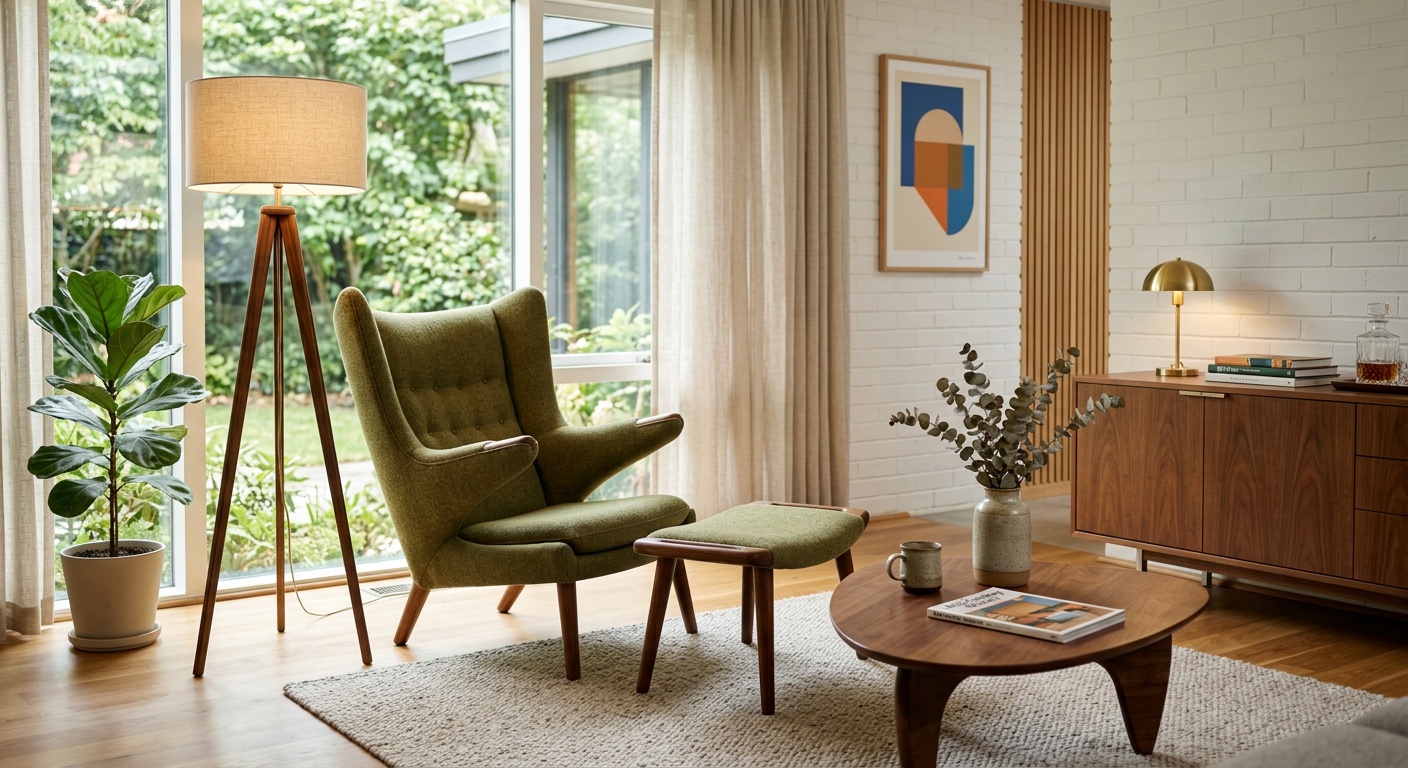
The MCM living room is the style’s natural home. Start with a low-profile sofa in a warm tone — burnt orange, caramel, or teal — and anchor it with a geometric area rug. Add a walnut coffee table, a Sputnik chandelier overhead, and a gallery wall featuring abstract prints in earthy tones. A singular statement plant — a fiddle-leaf fig or bird of paradise — grounds the space and reinforces the indoor-outdoor connection central to MCM philosophy.
Bedroom: Calm and Intentional Rest
In the MCM bedroom, less is genuinely more. A platform bed in walnut or teak, flanked by floating nightstands, creates a serene focal point. Warm lighting — think Edison bulbs in globe fixtures or a pair of articulating brass wall sconces — replaces harsh overhead lighting. Keep the textile palette simple: crisp white linens warmed by a mustard or olive throw. One piece of bold abstract art above the headboard provides personality without clutter.
Kitchen: Function as Beauty
MCM kitchens celebrate the beauty of functionality. In 2026, the trend toward MCM-inspired kitchens has accelerated, with Houzz reporting a 43% year-over-year increase in searches for “mid century modern kitchen” in early 2026. Key moves: flat-panel cabinetry in walnut veneer or warm white, brass hardware, terrazzo countertops or backsplashes, open shelving with carefully curated ceramics, and pendant lights in globe or cone shapes over a kitchen island.
Common Challenges and How to Overcome Them
Implementing MCM design isn’t without its friction points. Here are the three most common challenges — and how to navigate them strategically:
Challenge 1: Avoiding the “Time Capsule” Trap
The problem: Overcorrecting into pure vintage recreation makes a space feel like a museum rather than a home. Every element screaming “1960s!” tips from curated into costume.
The solution: Anchor with one or two authentic or high-quality vintage MCM pieces, then surround them with contemporary items that share MCM values (clean lines, natural materials, warm tones). A genuine Eames chair next to a current-generation wool rug and a modern abstract painting creates a dialogue between eras — which is exactly what the best MCM interiors achieve.
Challenge 2: Managing the “Cold and Sparse” Pitfall
The problem: New MCM enthusiasts sometimes interpret “clean lines” as “remove everything,” landing in a sparse, unwelcoming space that’s technically MCM but feels cold and unlived-in.
The solution: Warmth in MCM comes from intentional layering, not absence. Layer your textures — a smooth wood floor, a shag rug, a velvet cushion, a leather ottoman. Add plants liberally. Let your bookshelves hold actual books and a few curated objects. The goal is thoughtful curation, not deprivation.
Challenge 3: Budget Constraints
The problem: Authentic MCM pieces are expensive, and poorly made reproductions can cheapen the entire look.
The solution: Prioritize investment pieces strategically. Spend more on items that get touched and used daily — a sofa, a dining table, a lounge chair — because quality is most apparent in these. Save on decorative accessories, art, and soft furnishings by shopping vintage, DIYing, or choosing mid-market options. A single high-quality credenza can anchor an entire room that’s otherwise assembled economically.
Real-World Transformations: Two Inspiring Examples
Case Study 1: The Brooklyn Brownstone Revival
In 2025, interior designer Marco Haines documented the transformation of a 1,200-square-foot Brooklyn brownstone apartment for a couple in their early 40s who wanted MCM warmth without the visual weight of too much dark wood. The solution? Haines used a lighter Scandinavian-MCM hybrid approach: white oak instead of walnut, a neutral linen sofa punctuated by a single Eames fiberglass shell chair in mustard yellow, and a pair of Sputnik pendants over the dining area. Plants — six large specimens including a monstera and two rubber plants — softened the geometric lines. Total furniture investment: approximately $8,400, with roughly $2,200 spent on vintage pieces sourced through Chairish. The result was widely shared on design platforms, accumulating over 340,000 saves on Pinterest within six months.
Case Study 2: The Phoenix Ranch House Refresh
A Phoenix family with three children needed their 1964 ranch-style home to be both MCM-inspired and child-friendly — a combination that many assume is impossible. Designer Priya Nair tackled this by leaning into durable materials: a performance velvet sofa in deep teal (resistant to stains), concrete flooring with radiant heating (no rugs to trip over), and wall-mounted storage that kept the floor clear while celebrating walnut’s warmth overhead. Colorful Eames plastic shell chairs around the dining table added personality and were easy to wipe down. The lesson? MCM’s functionality-first philosophy makes it one of the most family-friendly design aesthetics available — if you lean into materials strategically.
MCM vs. Other Popular Styles: A Comparative Overview
| Design Style | Warmth Factor | Clutter Tolerance | Family-Friendliness | Entry Cost |
|---|---|---|---|---|
| Mid Century Modern | High | Low–Medium | High | Medium–High |
| Scandinavian Minimalism | Medium | Very Low | Medium | Low–Medium |
| Maximalism / Eclectic | Very High | Very High | Medium | Variable |
| Industrial Modern | Low–Medium | Low | Low | Medium |
| Coastal / Boho | High | Medium–High | High | Low–Medium |
2026 Interior Design Trend Popularity Among Homeowners
Based on aggregated search volume data, Pinterest saves, and Houzz project inquiries in early 2026:
Data represents relative search/engagement index, normalized to 100. Source: Aggregated from Google Trends, Houzz, and Pinterest data (Q1 2026).
Frequently Asked Questions
Is mid century modern design appropriate for small spaces?
Absolutely — in fact, MCM’s principles work exceptionally well in small spaces. The emphasis on low-profile furniture, clean lines, and purposeful placement means rooms feel larger rather than cramped. Opt for a compact platform sofa over a sectional, choose furniture with exposed legs (which create visual breathing room), use mirrors strategically to amplify light, and resist the urge to fill every corner. A well-curated small MCM room feels expansive and intentional rather than cluttered.
How do I prevent my MCM interior from feeling dated or kitschy?
The key is restraint and integration. Limit overtly “retro” elements — things like avocado appliances, shag carpeting throughout, or a room where every single piece is vintage — to two or three carefully chosen accents. Ground those vintage or retro-inspired pieces within a contemporary context: fresh white walls, current-generation textiles, and modern art. The goal is timeless, not themed. Think of MCM as a foundation vocabulary rather than a costume you’re putting on completely.
What’s the most impactful single change I can make to achieve an MCM feel immediately?
Replace your lighting. Seriously — nothing transforms a room’s aesthetic more quickly or cost-effectively than switching out generic ceiling fixtures for a Sputnik chandelier, globe pendant, or set of brass wall sconces. Lighting in MCM is sculptural and deliberate, and the right fixture immediately signals the aesthetic while bathing your space in the warm, diffused light that MCM interiors are known for. A quality pendant from a mid-market retailer can cost as little as $80–$200 and will change the entire feel of a room overnight.
Your MCM Roadmap: Bringing It All Together
Mid century modern design isn’t just a style trend that happens to be popular in 2026 — it’s a philosophy about how spaces should serve the people who inhabit them. As we move through an era increasingly defined by digital saturation and disposable everything, MCM’s commitment to beautiful, functional, lasting design feels less like nostalgia and more like a blueprint for intentional living.
Here’s your practical, action-oriented roadmap to get started — no matter where you are in your MCM journey:
- Audit your current space. Walk through each room and identify what aligns with MCM values (clean lines, natural materials, warm tones) and what actively works against them. Removing visual clutter and heavy window treatments is often the single most impactful free action you can take.
- Choose one anchor piece per room. Rather than overhauling everything at once, select one high-quality MCM anchor piece per room — a credenza, a lounge chair, a pendant light — and build around it gradually. This approach is both financially sustainable and aesthetically coherent.
- Master your color palette before shopping. Pin your wall color, your primary upholstery tone, your wood finish, and your accent color before purchasing anything. Having this framework prevents expensive mismatches and gives you confidence when sourcing pieces over time.
- Layer warmth deliberately. Once your furniture is in place, focus on textile layering: an area rug, throw blankets, cushions in complementary tones. Add plants — generously. These layers are what separate a room that looks like an MCM showroom from one that feels like a warm, lived-in home.
- Curate, don’t accumulate. Review your decorative accessories every six months. MCM rewards editing. If a piece isn’t earning its visual space, let it go. The restraint is part of what makes the style work.
The broader implication here is significant: in a 2026 design landscape characterized by sustainability concerns, rising material costs, and a collective hunger for spaces that genuinely restore us, mid century modern’s emphasis on quality over quantity, function over decoration, and warmth over sterility positions it not just as a style choice but as a values statement about how you want to live.
Here’s the question to sit with: What would it feel like to come home every evening to a space that was designed — from the ground up — to welcome you, calm you, and reflect what you actually value? That’s the promise of mid century modern done right. And it’s entirely within your reach, starting with one intentional decision at a time.