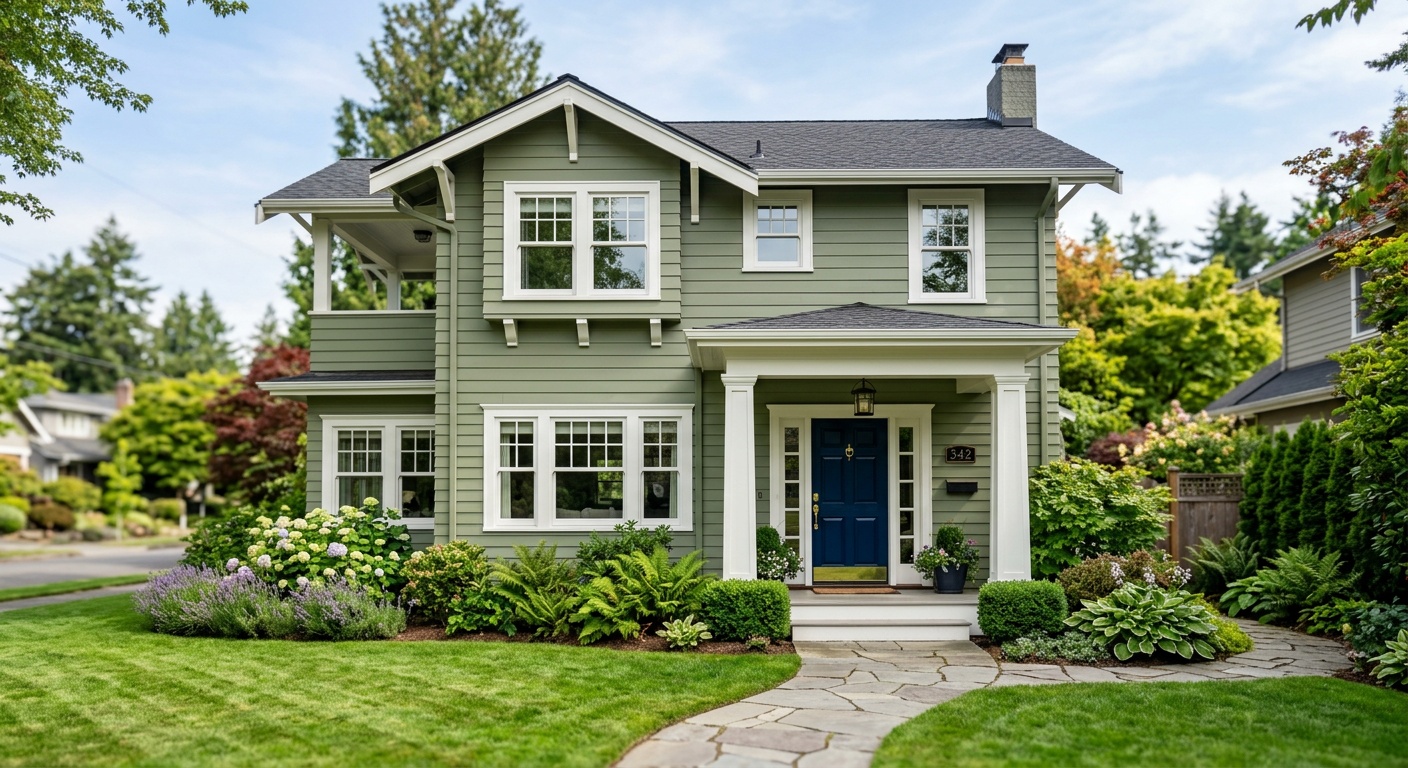
House Painting Color Ideas and Exterior Trim Tips for Homeowners
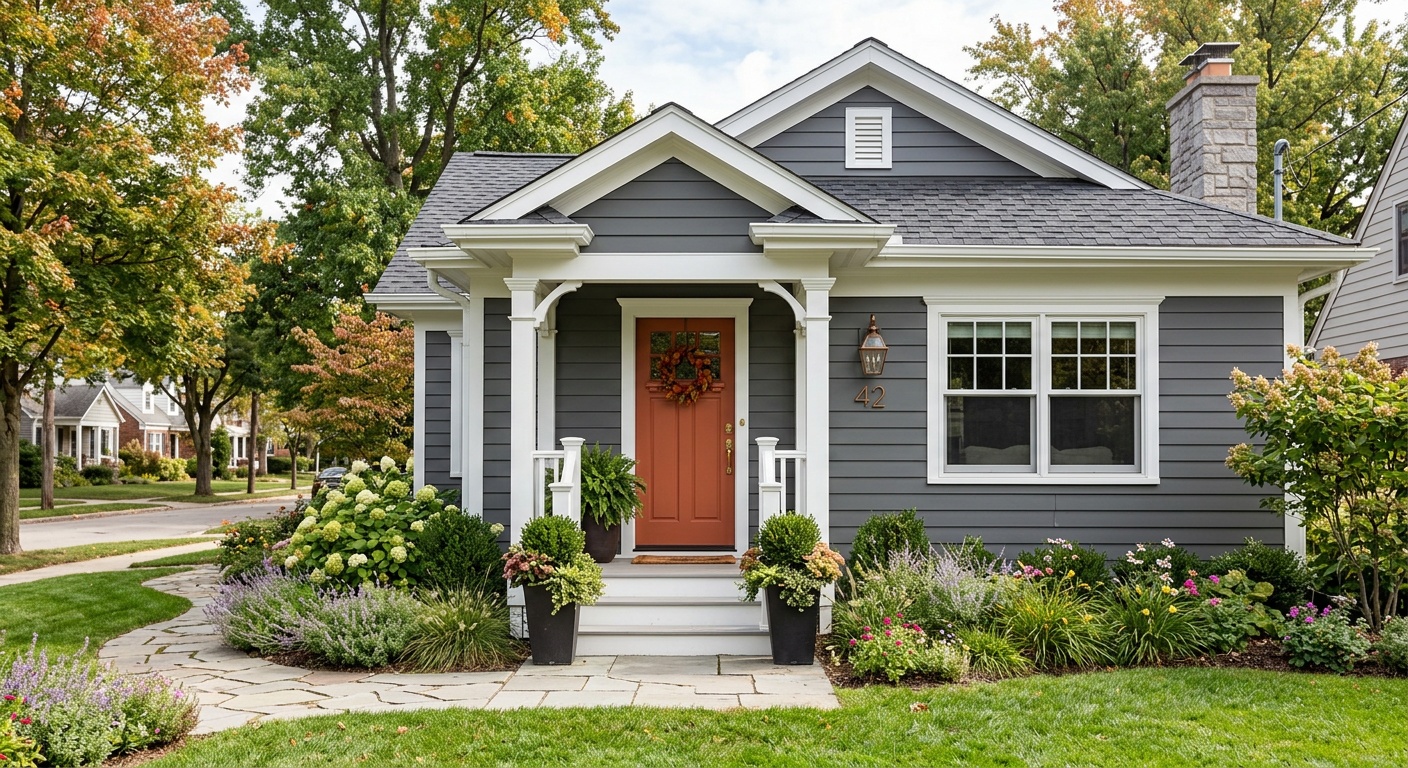
House Painting Color Ideas and Exterior Trim Tips for Homeowners
Reading time: 12 minutes
Ever stood in front of a paint swatch display feeling completely overwhelmed? You’re staring at 47 shades of white, wondering if Antique Linen is meaningfully different from Vintage Cream—and whether your neighbors will notice either way. You’re absolutely not alone. Choosing exterior paint colors and getting trim right is one of the most consequential—and most anxiety-inducing—decisions a homeowner can make.
Here’s the straight talk: Your home’s exterior isn’t just an aesthetic choice. It’s a financial asset, a first impression, and a reflection of your taste all rolled into one. According to a 2025 Zillow housing study, homes with well-coordinated exterior paint schemes sell for 2.5% to 4.9% more than comparable homes with dated or mismatched colors. That translates to real money—sometimes $8,000 to $20,000 on median-priced homes in 2026.
This guide is your practical roadmap through the entire process—from understanding color theory basics and reading 2026 trend forecasts, to nailing your trim details and avoiding the costliest rookie mistakes.
Table of Contents
- Why Exterior Color Matters More Than You Think
- 2026 Color Trends for Home Exteriors
- Core Color Principles Every Homeowner Should Know
- Exterior Trim: The Detail That Makes or Breaks Everything
- 3 Common Mistakes (and How to Fix Them)
- Real Homeowner Examples
- Color Popularity at a Glance
- Exterior Paint Comparison Table
- Frequently Asked Questions
- Your Exterior Transformation Roadmap
Why Exterior Color Matters More Than You Think
Think about the last time you drove through a neighborhood and one house just stopped you. Maybe it was a deep navy colonial with crisp white trim, or a warm sage craftsman with contrasting copper gutters. That reaction wasn’t accidental—it was the result of deliberate, strategic color decisions.
Your home’s exterior color performs several jobs simultaneously:
- Curb appeal: It sets the tone before anyone steps inside
- Architectural emphasis: Color highlights or hides structural features
- Resale value: A well-chosen palette can meaningfully boost your home’s market position
- Neighborhood harmony: Colors that work well within the surrounding context feel right without being copies
- Personal expression: Ultimately, it’s your home and your story
In 2026, the average exterior repaint costs between $3,200 and $9,800 for a standard single-family home, depending on size, surface prep complexity, and labor market in your region. That investment deserves serious thought and good planning.
The Psychology of Exterior Color
Color psychology isn’t just for interior designers. Research from the Pantone Color Institute and multiple real estate studies confirms that exterior colors trigger emotional responses before conscious thought kicks in. Dark, saturated tones like charcoal, deep navy, and forest green communicate stability and confidence. Warm neutrals—creamy whites, warm grays, and taupes—signal approachability and timelessness. Bold jewel tones suggest creativity and individuality.
Knowing your goal—whether it’s selling quickly, standing out in a neighborhood, or creating a personal sanctuary—should directly inform your palette selection before you even look at swatches.
2026 Color Trends for Home Exteriors
Color trends in exterior painting move more slowly than interior fashion—thankfully, because you don’t want to repaint your siding every two years. But 2026 has brought some genuinely exciting shifts worth understanding.
The Rise of Earthy, Grounded Tones
After several years of cool gray dominance—the so-called “greige era”—2026 has witnessed a decisive pivot toward warm, earthy neutrals. Think terracotta undertones in beige, soft clay, warm sand, and muted ochre. These palettes feel connected to the natural world, which aligns with broader 2026 consumer trends toward sustainability and biophilic design.
Benjamin Moore’s 2026 Color of the Year, Cinnamon Slate, captures this beautifully—a warm, dusty brown with just enough red undertone to feel rich without being overwhelming. It’s performed exceptionally well on craftsman bungalows and mid-century ranch homes.
Sherwin-Williams’ exterior-focused trend report for 2026 identified these as the top emerging color families:
- Warm taupes and clay neutrals — replacing cool grays as the go-to safe choice
- Deep greens — from hunter to sage, continuing their multi-year resurgence
- Muted blacks and near-blacks — especially on modern farmhouses and contemporary homes
- Dusty blues — a coastal-inspired but broadly applicable family gaining traction in landlocked markets
- Warm whites — replacing stark bright whites as the premium trim and base choice
What’s Fading in 2026
Equally useful is knowing what to avoid. Pure cool grays (without warm undertones) are feeling dated in 2026. Stark, bright white siding—once a sign of freshness—now reads as a bit flat compared to warmer alternatives. And that particular shade of builder-beige that dominated tract homes in the 2010s? Buyers in 2026 are actively noting it as a negative in listing feedback data compiled by the National Association of Realtors.
Core Color Principles Every Homeowner Should Know
Trends are useful context, but solid color principles are timeless. Master these fundamentals and you’ll make confident choices regardless of what’s fashionable.
The Three-Color Rule for Exteriors
The most reliable framework for exterior color planning uses exactly three distinct roles:
- Field color: The dominant color covering the largest surface area—your siding, stucco, or main wall material
- Trim color: Applied to window and door frames, fascia boards, corner boards, and architectural details—typically 1-2 shades lighter or darker than the field
- Accent color: Reserved for the front door, shutters, or a specific architectural feature—this is your personality play
This isn’t a rigid rule, but it’s a remarkably effective guardrail. Homes that go beyond three colors often feel visually chaotic from the street. Homes that use only one or two often feel flat and unmemorable.
Understanding Undertones and Why They’re Crucial
Here’s where many homeowners get tripped up: every paint color has an undertone—a subtle secondary hue that becomes visible in certain lighting conditions or when placed next to other colors.
That “gray” you loved on the swatch might have strong purple or green undertones that look bizarre against your red brick foundation. That “white” trim might have yellow undertones that clash with your cool-toned siding. Testing colors in natural light, at multiple times of day, on actual sample boards (not just swatches) is non-negotiable.
Pro Tip: Purchase sample quarts and paint 12″ x 24″ cardboard panels. Tape them directly to your house in different lighting zones—a shaded north wall, a sunny south-facing wall—and observe them for 48 hours before committing.
Working With Your Fixed Elements
Unlike interior rooms, exterior paint has to work alongside elements you typically can’t change: your roof color, brick or stone accents, concrete foundation, driveway material, and landscape. These are your starting constraints—not obstacles, but anchors.
Before selecting a single swatch, photograph your home and note the exact colors of every fixed element. Build your palette outward from there rather than falling in love with a color in isolation and trying to force it to work.
Exterior Trim: The Detail That Makes or Breaks Everything
If your main body color is the sentence, trim is the punctuation. Get it right and everything clicks. Get it wrong and the whole composition falls apart—even if the body color is perfect.
Trim Color Strategy: Beyond “Just Use White”
The reflexive answer to trim color is white, and honestly, it’s often correct—but “white” is never just white. There are hundreds of whites, and the wrong one can actively undermine an otherwise excellent color scheme.
Here’s a practical framework for choosing trim:
- Cool-toned siding (grays, blues, greens with blue undertones): Use a cool or neutral white trim—something like Chantilly Lace (Benjamin Moore) or Extra White (Sherwin-Williams)
- Warm-toned siding (taupes, tans, creams, warm greens): Use a warm white—Dove White, Antique White, or Swiss Coffee in various brand equivalents
- Dark siding (charcoals, navys, deep greens): High-contrast white trim is dramatic and beautiful; alternatively, consider a lighter version of the body color for a tonal, sophisticated look
- Natural wood siding: Dark trim in black, deep brown, or forest green creates a stunning frame without competing with the wood’s texture
Trim Details That Demand Attention
Not all trim elements deserve equal emphasis. Knowing which details to highlight—and which to minimize—is what separates a polished exterior from a confusing one.
Elements to emphasize:
- Front door surround and entryway details
- Decorative brackets or corbels (on craftsman/Victorian styles)
- Window headers on statement windows
- Porch columns and railings
Elements to minimize or match to siding:
- Utility boxes, meter covers, downspout brackets
- Garage door frames on homes where the garage is visually dominant
- Low foundation walls or crawl space vents
The Front Door as Design Statement
In 2026, front door color has become something of a cultural signal—and for good reason. A well-chosen door color adds enormous character for a fraction of the cost of a full repaint. According to a 2025 Redfin analysis, homes with black front doors sold for an average of $6,449 more than expected, while slate blue and navy doors also outperformed market expectations.
Current front door trends for 2026 include:
- Matte black — on both modern and traditional homes
- Deep terracotta or burnt orange — warm, welcoming, and on-trend
- Moody greens — hunter, olive, and British racing green
- Classic navy — the perennial performer
- Warm burgundy — making a comeback after a long absence
3 Common Mistakes (and How to Fix Them)
Even well-intentioned homeowners make the same errors repeatedly. Here’s how to sidestep the biggest ones.
Mistake 1: Choosing Color From a Screen or Small Chip
Paint looks categorically different on a backlit screen versus your physical wall in afternoon sunlight. And a 2-inch swatch chip is essentially useless for predicting how a color will read across an entire house façade. Fix it: Always test with large sample patches on multiple walls. Several paint companies now offer augmented reality tools—Benjamin Moore’s visualizer and Sherwin-Williams’ ColorSnap app have significantly improved in 2026—but still use them as a starting point, not a final answer.
Mistake 2: Ignoring Paint Sheen on Trim
Body color and trim color should typically use different sheens, not just different colors. Siding is usually painted in flat or low-luster eggshell (hides imperfections, weathers gracefully). Trim should almost always use semi-gloss—it’s more durable, easier to clean, and the slight reflection helps trim “pop” visually even from a distance. Using flat finish on trim is a surprisingly common mistake that dulls the entire composition.
Mistake 3: Not Accounting for Neighborhood Context
Your home exists in relationship to its surroundings. A color that looks spectacular in isolation can feel jarring—or worse, antagonistic—in a neighborhood with a cohesive visual character. This doesn’t mean you need to match your neighbors; it means your color should harmonize while still having its own personality. Walk or drive your street and photograph the surrounding palette before finalizing your choice.
Real Homeowner Examples
Case Study 1 — The Portland Tudor Rescue: In early 2025, a couple in Portland, Oregon purchased a 1930s Tudor revival with stained and peeling dark brown siding and bright white trim that had gone gray with age. The home’s fixed elements included a charcoal-brown roof and dark brick accents around the entry. Working with a color consultant, they chose Pewter Green (Sherwin-Williams) as the body—a warm, sophisticated green with brown undertones that harmonized beautifully with the brick—and a warm creamy white, Alabaster, for the trim. The front door in Iron Ore (near-black) provided drama. Total repaint cost: $7,200. Estimated value added per their 2026 appraisal: approximately $18,000.
Case Study 2 — The New Construction Trap: A first-time homeowner in the Dallas suburbs in 2025 moved into a new build painted builder-beige with bright white trim. Desperate to differentiate her home from the eleven identical ones on her street, she chose a trendy color from an Instagram post—a vibrant cobalt blue—without testing it against her cream-colored concrete driveway, beige roof tiles, and brick foundation pillars. The result was a visual collision. After a painful and costly repaint, she landed on Basalt (a soft, warm gray-green), which harmonized with all her fixed elements. The lesson: trends must be filtered through your specific context.
Color Popularity at a Glance: 2026 Exterior Color Trends
Based on aggregated data from Sherwin-Williams, Benjamin Moore, and the Paint Quality Institute’s 2026 consumer survey, here’s how major exterior color families rank in current homeowner preference:
Warm Neutrals (Taupe/Clay/Cream)
Deep Greens (Hunter/Sage/Forest)
Matte Black / Near-Black
Dusty Blues (Coastal/Slate Blue)
Cool Grays (Still Present)
*Percentage reflects “strong interest/positive consideration” among surveyed homeowners, 2026.
Exterior Paint Comparison: Top Products in 2026
| Product | Coverage (sq ft/gal) | Price/Gallon (2026) | Durability Rating | Best For |
|---|---|---|---|---|
| Sherwin-Williams Emerald Exterior | 350–400 | $92–$98 | ⭐⭐⭐⭐⭐ | All siding types, premium durability |
| Benjamin Moore Aura Exterior | 350–400 | $88–$96 | ⭐⭐⭐⭐⭐ | Color depth, fade resistance |
| Behr Marquee Exterior | 300–400 | $62–$72 | ⭐⭐⭐⭐ | Value, DIY-friendly application |
| PPG Timeless Exterior | 300–380 | $58–$68 | ⭐⭐⭐⭐ | Budget-conscious full repaint projects |
| Farrow & Ball Exterior Eggshell | 250–320 | $125–$145 | ⭐⭐⭐⭐ | Distinctive color depth, designer applications |
Frequently Asked Questions
How many colors should I use on my home’s exterior?
The classic guidance is three: a primary body color, a trim color, and an accent (typically the front door or shutters). Homes with complex architectural details—Victorians, Queen Annes, detailed craftsmans—can successfully use four or even five colors to highlight individual ornamental elements. But for most standard homes built between 1950 and 2010, three is the magic number. Going beyond that without a deliberate plan tends to create visual noise rather than character.
How long does exterior paint typically last, and when should I repaint?
Quality exterior paint in 2026 is formulated to last 8 to 15 years depending on climate, surface preparation, and paint quality. Wood siding typically needs repainting every 7–10 years; engineered wood and fiber cement every 10–15 years; stucco every 5–7 years. Key warning signs that it’s time: visible peeling, chalking (a powdery residue when you run your finger along the wall), fading beyond the point of even coverage, or cracks forming in the paint film. Don’t wait for wholesale failure—addressing deterioration early dramatically reduces surface prep costs.
Should I hire a professional painter or DIY my exterior?
This depends on three factors: your home’s height and complexity, the condition of your current paint, and your available time. Single-story homes with minimal detail and good existing paint condition are genuinely achievable DIY projects for moderately skilled homeowners. Multi-story homes with significant prep needs—scraping, caulking, priming—are better handled by professionals both for quality outcomes and safety reasons. In 2026, professional exterior painters are booking 6–12 weeks out in most markets, so plan accordingly. If you DIY, the biggest professional-grade investment you can make is in surface preparation: the prep determines 70% of the final result’s quality.
Your Exterior Transformation Roadmap
Here’s the bottom line: transforming your home’s exterior doesn’t require a design degree or an unlimited budget. It requires a thoughtful process, some patient testing, and respect for the details that professionals take seriously. Let’s put it all together.
Your 5-Step Action Plan:
- Audit your fixed elements first. Photograph your roof, foundation, brick or stone, driveway, and landscaping. Identify the undertones present. These are your constraints—build your palette around them, not against them.
- Identify your goal. Are you preparing to sell in the next 12 months? Maximize resale-friendly choices—warmer neutrals, classic trim approaches, strategic door colors. Are you staying for 15 years? Give yourself permission to express more personality.
- Filter trends through your architecture. The 2026 earthy neutrals work brilliantly on craftsmans and ranches. They may not serve a colonial or a contemporary box home as well. Always ask: does this trend suit my style of home?
- Test aggressively before committing. Paint large sample boards (minimum 12″ x 24″), test them on multiple walls at multiple times of day, and live with them for 48–72 hours. This step alone prevents the most expensive mistakes.
- Get the trim right. Choose your trim sheen (semi-gloss) before your trim color. Ensure warm-toned body colors pair with warm-toned whites, and vice versa. Don’t forget the door—it’s your final signature.
Exterior color trends in 2026 reflect a broader cultural shift: homeowners are investing more intentionally in their homes as long-term assets and personal sanctuaries, not just market-ready products. That means choices that feel authentically yours while remaining strategically sound.
So here’s the question worth sitting with: When you pull into your driveway tonight, does your home look like the home you want to live in? If the honest answer is no—you now have the framework to change that.